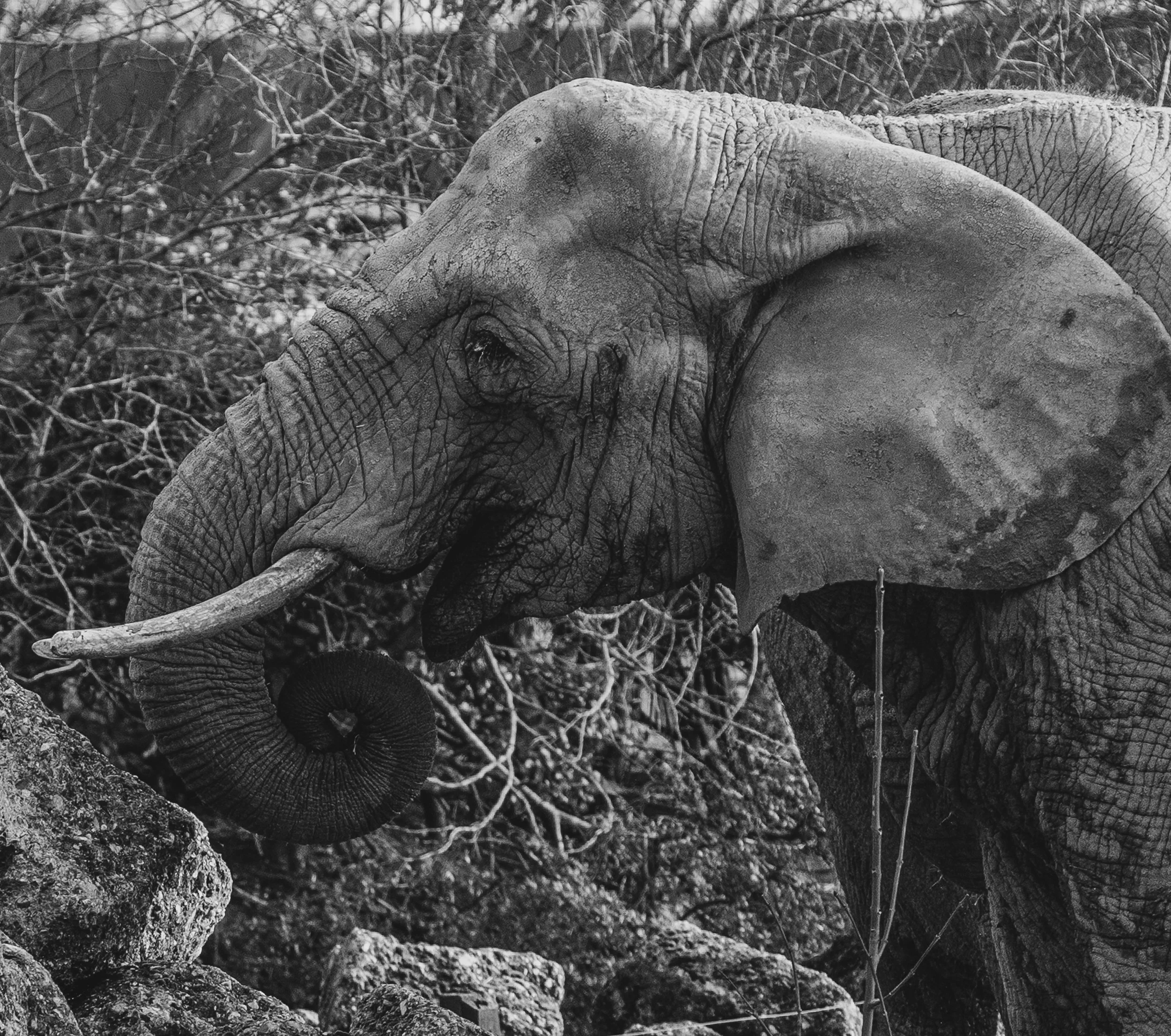
World Elephant Day – Every Elephant Has a Story
The three elephants currently living at Colchester Zoo — Tanya, Tembo and Opal — each have their stories.
Tembo and Opal were taken from the wild and eventually sold to Chipperfield’s Circus, where they were subjected to horrific abuse.
The cruelty within the circus was eventually exposed by a charity known as Animal Defenders, who carried out an undercover investigation, filming the treatment of the elephants over a period of around three months. The footage was deeply disturbing and was later shown in court. It showed a farm worker beating elephants with an iron bar, a shovel, a broom and a pitchfork.
The court case resulted in convictions for cruelty. Roger Cawley, husband of circus owner Mary Chipperfield, was also found guilty of being cruel to a sick elephant named Flora at the circus’s winter quarters near Andover in December 1997.
For Tembo and Opal, their lives eventually changed when they left the travelling circus and came to Colchester Zoo, where they have spent many years.
Tanya’s story is very different. She was originally orphaned in Zimbabwe and was later brought to the UK. She lived at Longleat Safari Park with another elephant called Zola before eventually moving to Colchester Zoo with Zola.
Sadly, Zola has since died, leaving Tanya, Tembo and Opal as the zoo’s three remaining elephants.
Knowing their histories makes photographing them particularly meaningful to me. They aren’t simply elephants in a zoo enclosure. Each has a story — of being taken from the wild, surviving loss and, in the case of Tembo and Opal, surviving the cruelty of the circus.
That history makes their present-day care particularly interesting. Modern elephant management is increasingly based around choice, positive reinforcement, and protected contact, rather than physically handling the animals.
During my own zoo experience, I was able to see how this works. Within the elephants’ enclosure is a specially designed training and examination door, divided into three sections. The upper section allows keepers to examine the ears, the middle section gives access to the trunk, and the lower section allows them to examine the feet.
The elephants aren’t forced to use the door. Instead, they are trained to voluntarily present the appropriate body part, with positive reinforcement when they participate. This allows keepers to carry out important health checks, administer injections and monitor things such as foot conditions while keeping a safe barrier between the elephant and keeper.
For me, this was one of the most fascinating parts of seeing the elephants behind the scenes. It’s a good example of how elephant care has changed: the emphasis is no longer on making an elephant do something, but on teaching them to participate willingly.
Elephants are incredibly intelligent and curious. In the wild they spend much of their day walking and foraging, often feeding for 12 to 18 hours. Zoos work hard to encourage these natural behaviours by providing hay, browse (leaves, twigs and branches), vegetables and enrichment that encourages elephants to search, investigate and problem-solve rather than simply eating from a pile of food. Mud wallows, scratching posts, hanging browse and puzzle feeders all help keep both their bodies and minds active.
During the COVID-19 lockdowns, many people asked whether zoo animals missed visitors. While we can’t know exactly what elephants were thinking, keepers observed that changes in routine affected many animals. For intelligent species like elephants, daily enrichment, interaction with their herd and regular keeper-led activities remained important parts of their lives while the zoo was closed.
Another fact I found fascinating is that elephants can be left- or right-tusked, much like people are left- or right-handed. They naturally favour one tusk for digging, stripping bark or moving objects, which means that tusk often becomes shorter through years of use.
Sadly, wild African elephants continue to face enormous challenges. Habitat loss, conflict with people and poaching for ivory remain among the greatest threats to their survival. Modern zoos play an important role, not only by caring for elephants to high welfare standards but by supporting conservation projects, funding fieldwork, educating visitors and helping protect elephant populations in the wild.
Photography allows us to pause and really look at an animal. My hope is that every photograph encourages someone to ask a question, learn something new and care a little more about the wildlife we share our planet with.
Because every elephant has a story.
And every story is worth protecting.
Happy World Elephant Day.