Colchester’s tigers: Built for Snow Making a Splash
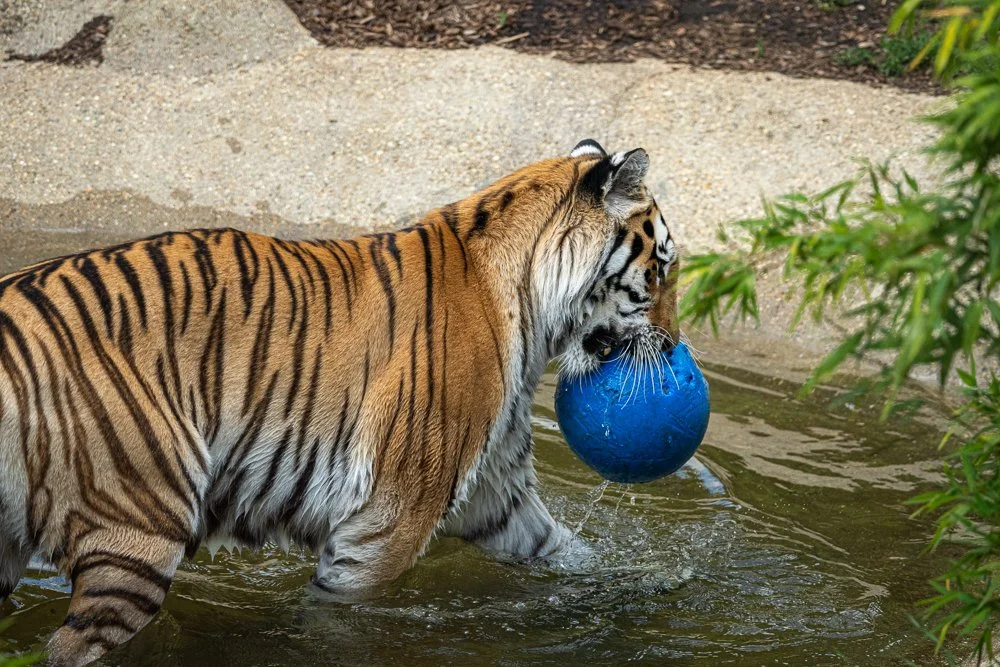
At first glance, this is simply a tiger carrying a bright blue ball through the water. Look a little closer, and it becomes a story about conservation, welfare and the importance of enrichment.
This is an Amur tiger, also known as the Siberian tiger. Native to Russia’s Far East, these magnificent cats are endangered and have evolved to survive one of the harshest environments on Earth, where winter temperatures can fall to -20°C to -30°C.
Their thick coats hold an extra 5 cm layer of fat around the belly and flanks, and larger webbed paws help them cope with deep snow, water and freezing conditions. They are also one of the very few predators capable of hunting bears. As the largest of all wild cats, they sit at the top of the food chain, playing a vital role in maintaining a healthy ecosystem.
Just like our fingerprints, no two tigers share the same stripe pattern, making every individual unique.
Colchester Zoo has been home to tigers since 1966 and is currently home to two Amur tigers – a mother and daughter. Their family line is part of international conservation breeding programmes that help protect the future of this endangered species.
Modern zoos don’t simply provide food and shelter. They work hard to encourage animals to express their natural behaviours through carefully planned enrichment.
The blue ball in this photograph is one example. It encourages curiosity, play and problem-solving while stimulating the tiger’s hunting instincts. Keepers regularly introduce different enrichment items to challenge the tigers mentally and physically, helping to prevent boredom and encouraging natural behaviours.
Feeding is also designed to mimic life in the wild. Meat may be suspended from high poles, encouraging the tigers to use the powerful muscles in their neck, shoulders and legs as they would when bringing down prey. Sometimes food is attached to floating logs or placed over water, encouraging the tigers to swim, explore and work for their meal. Large bones help keep their teeth healthy, while regular fasting days reflect the natural pattern of wild tigers, who don’t make a successful kill every day.
As photographers, it’s easy to focus on creating a striking image. But I believe photographs can do something more. They can help us understand the lives of the animals we admire, the challenges they face and the incredible work being done to protect them.
Every photograph has the power to tell a story. Sometimes, that story is about survival.
As World Tiger Day approaches on the 29 July, let’s celebrate not only the beauty of tigers but the dedicated conservation work helping to protect them.